Weather Pattern Impacts on Line Shifts During Outdoor Events in Tennis, Cricket, and Horse Racing Markets
Written by Alex Beck · Jul 12, 2026
Weather Pattern Impacts on Line Shifts During Outdoor Events in Tennis, Cricket, and Horse Racing Markets
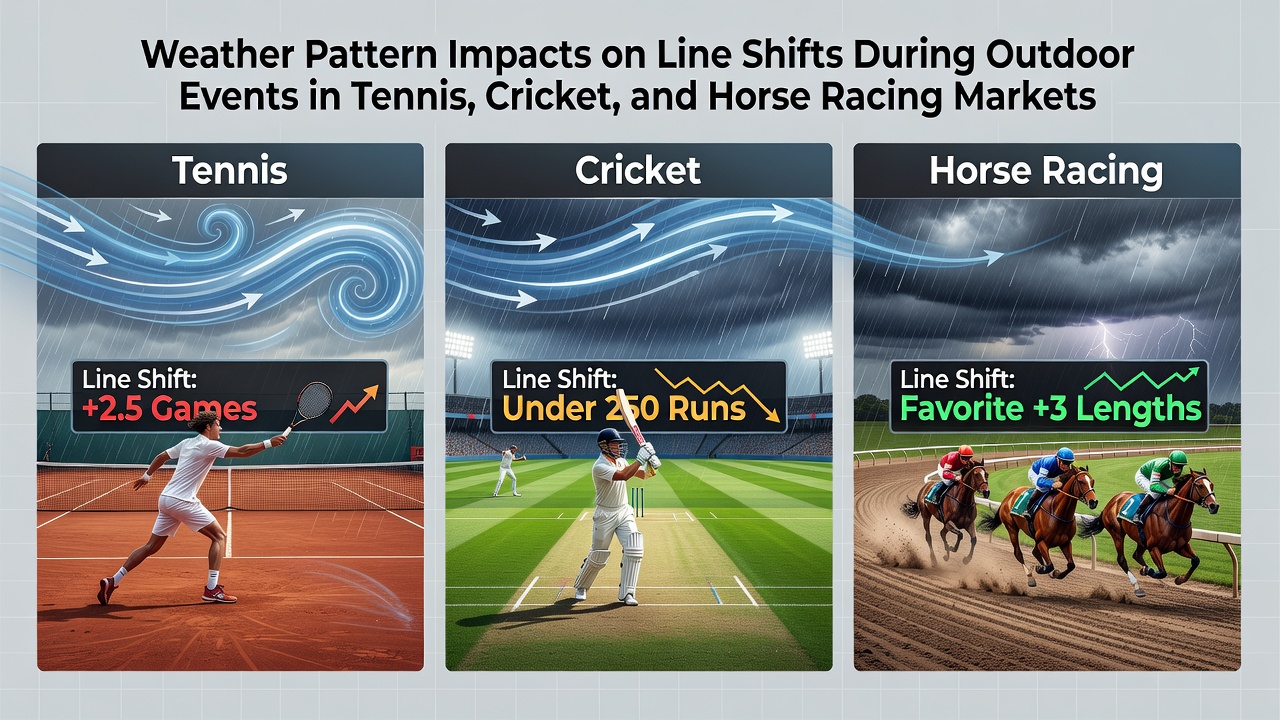
Weather conditions directly influence outdoor sports performance and therefore alter betting market lines across tennis, cricket, and horse racing. Observers note that rain, wind, temperature fluctuations, and humidity change player or animal output in measurable ways, prompting bookmakers to revise odds in real time. Research from meteorological agencies shows these shifts occur because surface conditions, visibility, and physical exertion respond quickly to atmospheric changes. In tennis, court surfaces absorb moisture at different rates depending on the event location and court type. Clay courts retain water longer than grass or hard courts, which slows ball speed and increases rally length. Data collected during Grand Slam tournaments indicates that serve percentages drop when humidity exceeds 70 percent, leading markets to adjust over/under totals downward within the first set. Wind gusts above 15 mph further affect trajectory on exposed courts, and analysts track these variables because they correlate with higher unforced error rates among players who rely on power serves. Cricket matches stretch across multiple sessions, so weather effects accumulate over longer periods. Rain interruptions force covers onto pitches and alter moisture content, which favors seam bowlers early while reducing spin later in the day. Figures from international fixtures reveal that team totals often fall by 15 to 20 runs when play resumes on damp pitches, prompting live markets to recalibrate run lines and wicket odds. Temperature spikes during afternoon sessions also increase fatigue among fast bowlers, a pattern documented in reports covering Test matches played in subtropical regions. Horse racing tracks respond even more visibly to precipitation because ground conditions determine footing and stride efficiency. Turf courses soften after rainfall, which favors horses with proven stamina while disadvantaging front-runners who prefer firm ground. Official going reports issued by racecourses record these changes hourly, and markets move accordingly as late money shifts toward stayers. Temperature drops in the evening can tighten muscles in animals that have already raced earlier in the card, a factor monitored through veterinary and performance data released by racing authorities.Regional Weather Data and Line Adjustments
Global weather services supply the raw information that feeds these adjustments. The Australian Bureau of Meteorology publishes detailed forecasts that racing and cricket officials use to schedule or delay events, while the National Oceanic and Atmospheric Administration provides similar guidance for North American venues. When forecasts predict prolonged rain during a scheduled meeting, lines on affected races or matches move within minutes of the update reaching trading desks.
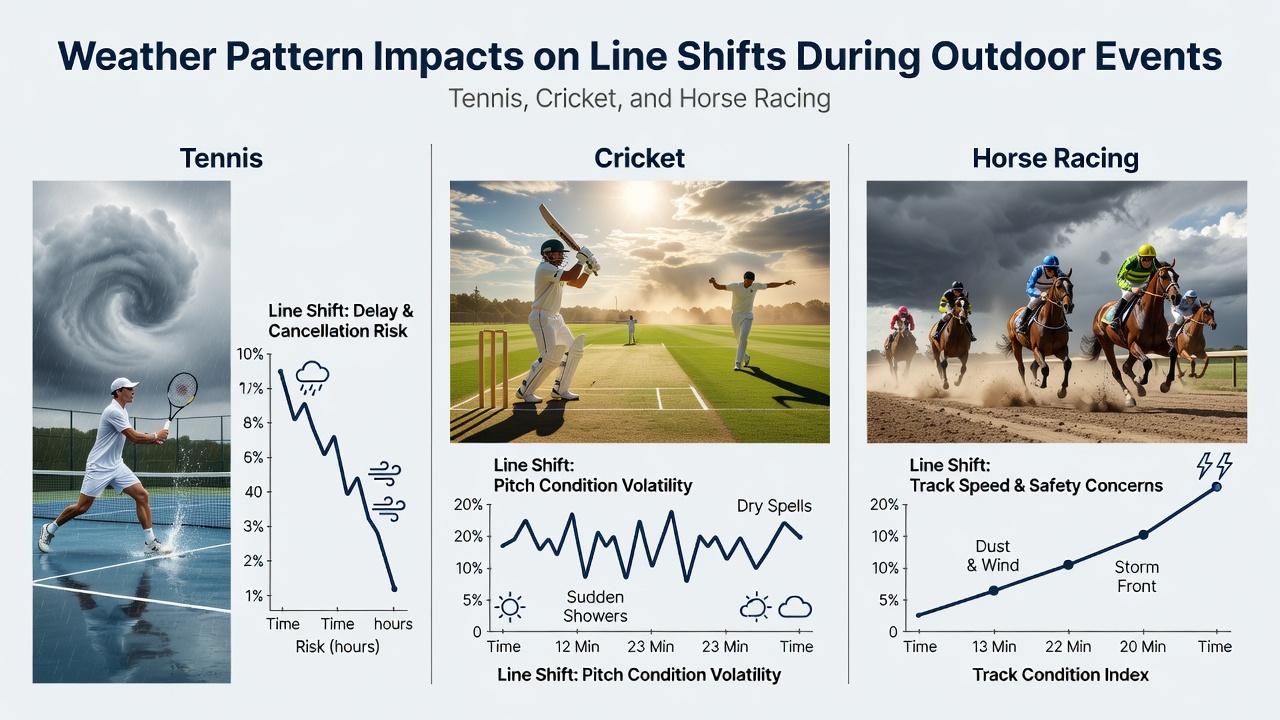 July 2026 brings several high-profile outdoor events into peak summer weather windows. Wimbledon fortnight typically encounters variable July conditions on grass courts, where brief showers can extend match times and compress later rounds. Concurrently, major horse racing festivals in Europe and Australia schedule cards that can encounter sudden track softening if thunderstorms develop. Cricket schedules in the northern hemisphere also place limited-overs tournaments during the same month, increasing the probability that live totals markets will see multiple revisions within a single day.
Market Mechanics Under Changing Conditions
Bookmakers employ algorithms that ingest real-time weather feeds alongside historical performance splits. When wind speeds rise during a tennis match, algorithms lower implied probabilities for high serve percentages and raise them for longer match durations. Cricket markets similarly recalibrate session totals once covers come off, because empirical models show reduced scoring rates on wetter surfaces. In racing, non-runners and jockey changes triggered by track updates create cascading effects on place and each-way lines.
Studies compiled by sports science institutes demonstrate that reaction times and decision-making degrade under high heat stress, a finding applied across all three sports. These physiological responses translate into statistical edges that professional traders monitor through proprietary models. As a result, line movement accelerates when official weather warnings coincide with live play rather than pre-event forecasts.
Conclusion
Weather remains one of the few external variables that can override form-based expectations in outdoor betting markets. Because tennis rallies, cricket sessions, and horse racing distances each respond to atmospheric conditions within narrow time frames, continuous monitoring of forecasts and on-site reports allows markets to reflect updated probabilities quickly. Observers who track these interactions note that line shifts become most pronounced when multiple weather factors converge during a single event window.