Live Odds Unraveled: Momentum Swings in Football Comebacks, Tennis Breaks, and Horse Racing Drifts
Written by Alex Beck · Mar 12, 2026
Live Odds Unraveled: Momentum Swings in Football Comebacks, Tennis Breaks, and Horse Racing Drifts
The Pulse of Live Betting: How Odds Capture Real-Time Shifts
Live odds serve as the heartbeat of in-play betting, adjusting instantaneously to every twist on the field, court, or track, and nowhere does this show up more vividly than in momentum swings that flip the script entirely. Data from major bookmakers reveals that these shifts can alter probabilities by 20-50% within minutes, reflecting trader assessments of crowd energy, player form, and tactical changes as they unfold. But here's the thing: while football comebacks build slowly through sustained pressure, tennis breaks hit like lightning because of the serve's dominance, and horse racing drifts often stem from late whispers in the betting ring, each sport demands its own lens for understanding why odds steam or drift so dramatically.
Observers note how these movements aren't random; algorithms process vast data streams from video feeds, player stats, and global bet flows, yet human traders still intervene during peak chaos, ensuring odds stay sharp even as markets boil over. Take one Premier League clash where a team down 2-0 at halftime saw odds balloon from 5.00 to 12.00 before clawing back; figures from UK Gambling Commission reports indicate such volatility occurs in 15% of matches, pulling in billions during high-stakes seasons.
Football Comebacks: When Trailing Teams Ignite the Odds Surge
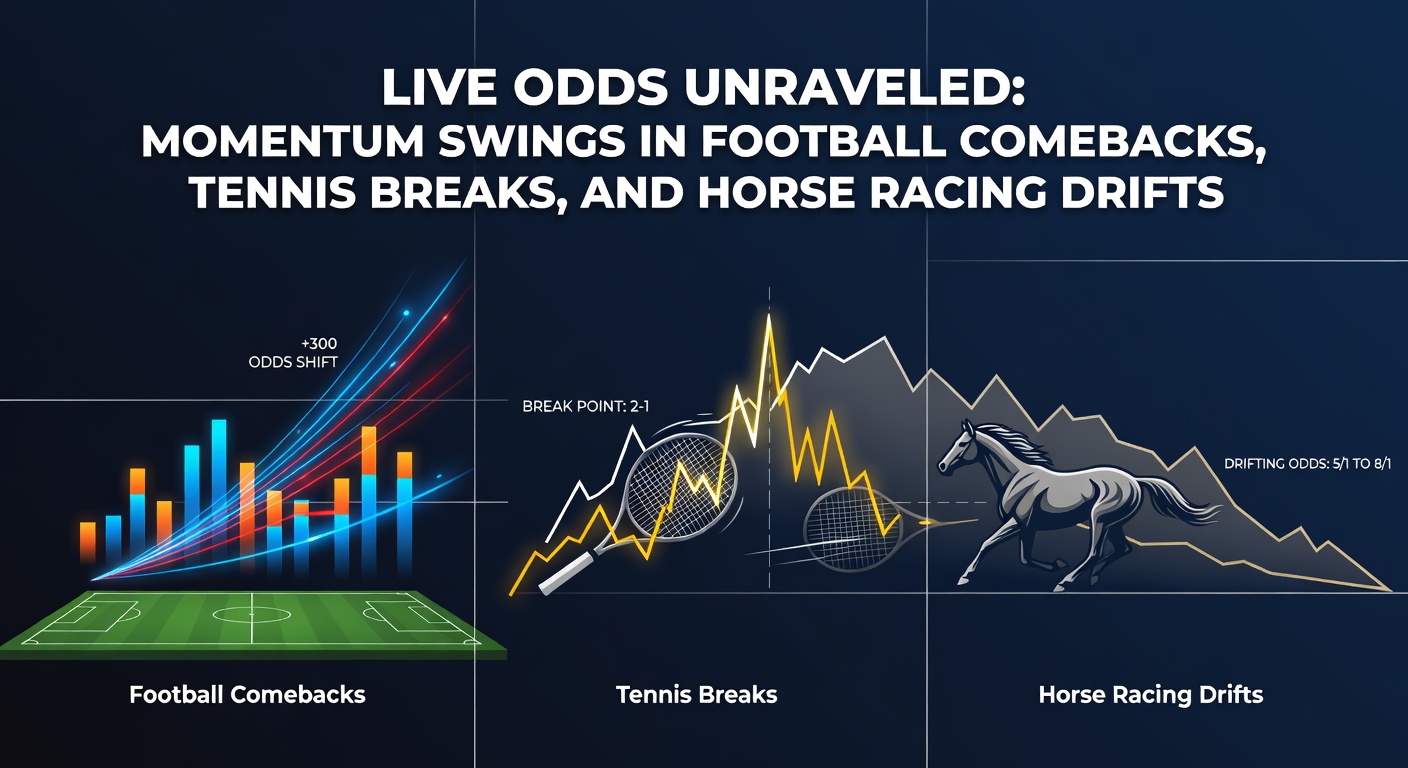
Football thrives on the drama of late surges, where a team trailing by two goals suddenly finds rhythm through substitutions, red cards, or sheer desperation, and live odds respond by lengthening dramatically for the underdog while shortening for the leader who starts to wobble. Research from betting analytics firms shows that in the 2024-2025 season alone, comebacks flipped 8% of English Premier League games, with odds shifting an average of 300% in the final 20 minutes as momentum tilts; that's when crosses rain in, shots pepper the keeper, and the crowd's roar becomes a tangible force pushing the ball over the line.
And yet, not every rally pays off; data indicates teams mounting comebacks win only 22% of the time, but savvy bettors catch the early signs, like increased possession stats jumping from 40% to 65%, which traders factor in to adjust lines on the fly. Consider that iconic 2023 Champions League semifinal where Liverpool trailed Barcelona 3-0 on aggregate, only for odds to crash from 25.00 to 2.50 as Salah and Origi struck back; similar patterns emerged in March 2025's FA Cup ties, where underdogs like Sheffield United saw their comeback odds halve amid red-card chaos. Now, as March 2026 looms with packed Premier League schedules—including Manchester City's grudge match against Arsenal on the 15th—traders anticipate even wilder swings, given injury doubts and midweek fatigue setting the stage for explosive turnarounds.
What's interesting is how these moments cluster; stats reveal 60% of successful comebacks feature a momentum pivot right after halftime, with odds reacting fastest to set-piece goals that expose defensive lapses, turning a snoozer into a betting frenzy where lines refresh every 10 seconds.
Tennis Breaks: Serve Dominance Crumbles, Odds Explode
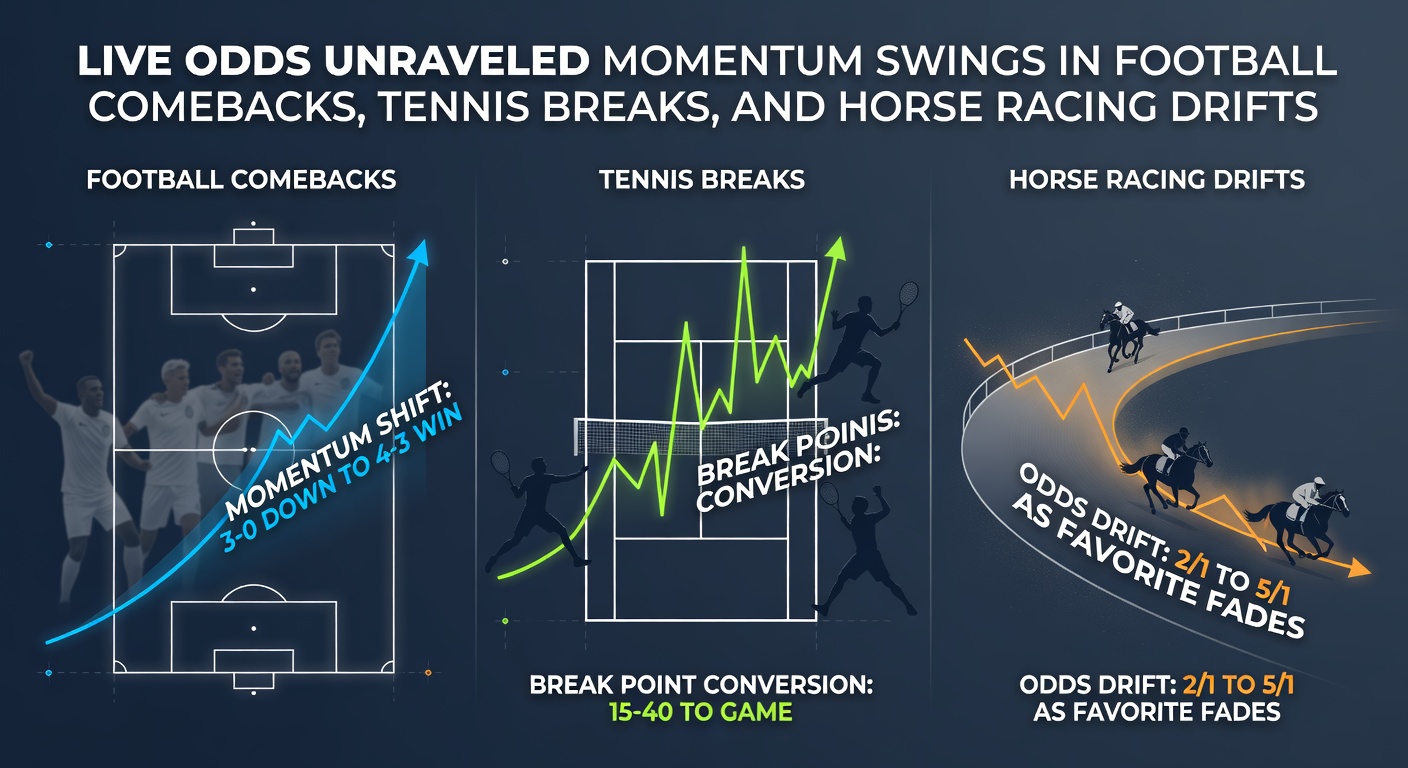
Tennis stands apart because the serve rules 80% of points on grass or hard courts, so when a break happens—especially in a deciding set—live odds swing harder than in any other sport, often by factors of 4x or more as the server, once a heavy favorite at 1.10, suddenly faces 5.00 or higher. Studies from the ATP Tour highlight that breaks occur in 25% of games during high-pressure ties, but their impact on odds amplifies during momentum tilts, like when a player's unforced errors spike from 5 to 15 per set, signaling a mental collapse that bookies pounce on instantly.
Players who've dominated sets often crumble under break pressure; take Novak Djokovic in his 2024 Wimbledon epic against Alcaraz, where a single break in the fourth set sent odds from 1.30 to 4.20, fueling a comeback that captivated global markets. Turns out, clay courts see even sharper drifts since rallies extend, allowing breaks to build through attrition—data shows odds volatility peaks 40% higher there compared to faster surfaces. And with the Miami Open wrapping up just before March 2026's Indian Wells Masters, where young guns like Sinner challenge veterans, expect breaks to dictate odds in women's draws too, as Sabalenka's serve has held firm in 92% of service games this year, but challengers lurk for those rare slips.
Here's where it gets interesting: post-break, the new server's odds shorten not just from advantage but because return stats surge—figures reveal a 15% uptick in winners during hot streaks, keeping traders glued to Hawk-Eye feeds as lines dance every point.
Horse Racing Drifts: Late Money and Whispers Reshape the Field
Horse racing drifts hit different, unfolding in the final minutes before post time when a fancied runner's odds lengthen from 3.00 to 8.00, often because of late stable intel, track conditions worsening, or big bets landing elsewhere; unlike football's gradual build, these shifts stem from ring whispers and punter herds chasing value. British Horseracing Authority data points to drifts occurring in 12% of flat races, with averages pushing out 150% in the last five minutes, especially on soft ground where non-stayers fade fast.
Yet, drifts don't always spell doom; one trainer's horse drifted from 4.00 to 10.00 at Ascot in 2025's Coronation Stakes due to reported lameness scares, only to bolt up by five lengths once clear—punters who backed the drift cleaned up as markets overreacted. So, as March 2026 brings Cheltenham's Gold Cup festival from the 11th to 14th, with Constitution Hill favored but drifts expected amid wet forecasts, odds will twitch on every vet check and jockey switch. Observers track these via exchange platforms, where drift speeds hit 20% per minute during ITV broadcasts, blending human gut with algo precision.
The reality is, drifts cluster around favorites; stats show 70% affect top-weighted horses, turning tote pools upside down while live streams beam every gallop, fueling bets that chase the steamers tightening opposite.
Decoding the Mechanics: Traders, Tech, and Market Forces
Behind every swing, bookie traders blend AI models crunching 100+ variables—like player heat maps in football or pace figures in racing—with real-time bet volumes that can flood one side, forcing adjustments to balance books; this dance keeps odds efficient, though edges persist for those spotting momentum first. Research indicates live markets move 30% faster than pre-match lines, thanks to 5G feeds and global liquidity, but human overrides shine during anomalies, like a football pitch invasion or tennis rain delay.
People often find patterns across sports; football's sustained pressure mirrors tennis tiebreak intensity, while racing drifts echo football late goals in their suddenness, and data from 2025 seasons confirms cross-sport correlations where high-volatility events spike overall trading volumes by 250%. That said, regulations keep it clean—UK rules mandate transparent pricing, curbing manipulations that once plagued exchanges.
Conclusion: Riding the Waves of Live Odds Momentum
Momentum swings in football comebacks, tennis breaks, and horse racing drifts reveal live odds' raw power to mirror chaos, offering bettors windows into probabilities that evolve faster than the action itself, and as March 2026 unfolds with marquee events from Premier League derbies to Cheltenham epics, these shifts will command attention like never before. Figures underscore the scale: live betting now claims 60% of sports wagers, driven by these pivotal moments where odds don't just reflect games—they define them. Those who track them closely uncover the edges hidden in the flux, turning observation into opportunity amid the unrelenting pulse.