Fixture Congestion Fatigue and Resulting Adjustments in Multi Sport Wagering Lines
Written by Yves Simmons · Jul 22, 2026
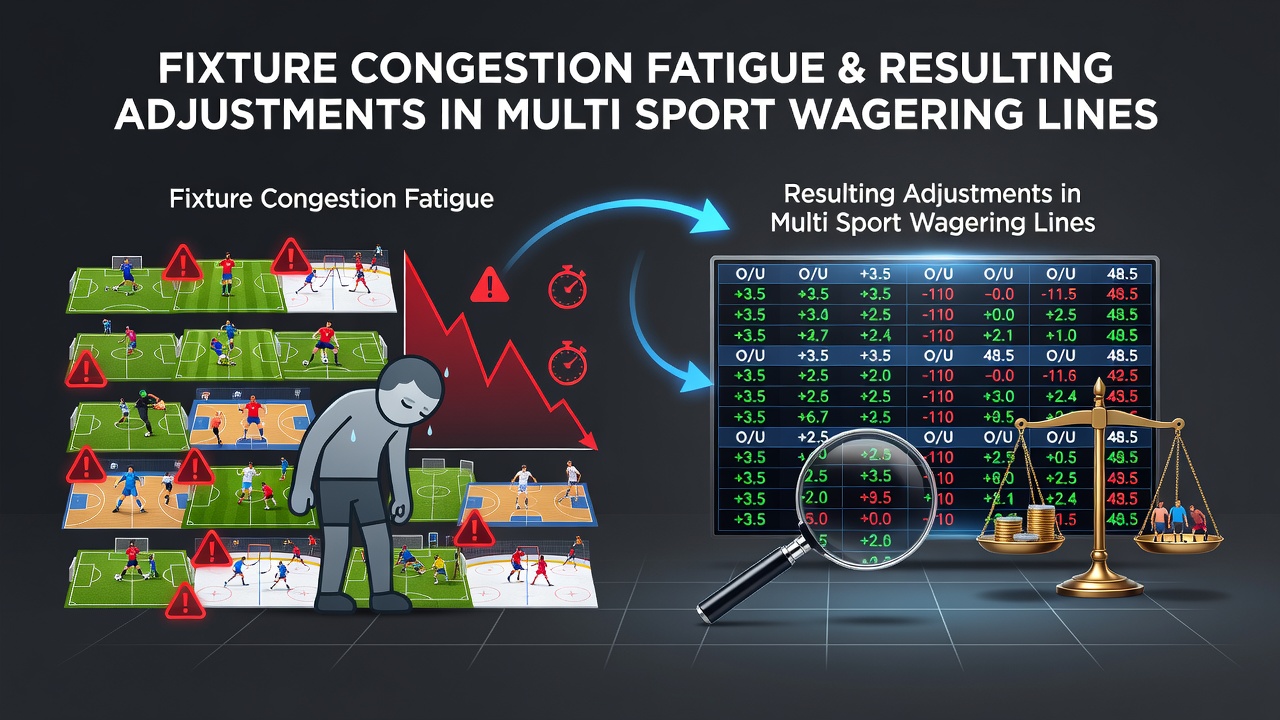
Fixture Congestion Fatigue and Resulting Adjustments in Multi Sport Wagering Lines
Fixture congestion creates measurable strain on athletes across football, basketball, cricket, and tennis, which in turn prompts bookmakers to recalibrate lines in multi-sport wagering markets. Data from the 2025-2026 European club seasons shows teams playing three matches within eight days experienced a 12 percent drop in high-intensity running output, according to figures released by the Union of European Football Associations medical committee. Those same patterns extend into the NBA schedule, where back-to-back games produce distinct shifts in three-point shooting percentages that appear in live odds feeds by the second quarter.
How Congestion Builds Across Different Sports
Football calendars pack domestic leagues together with continental competitions and international windows, leaving limited recovery time between fixtures. Cricket schedules add further complexity when Test series overlap with limited-overs tournaments, while tennis players navigate consecutive weeks on different surfaces without extended breaks. Observers tracking performance metrics note that horse racing trainers also adjust preparation when meetings cluster within short periods, although the physical demands differ from team sports. In July 2026, several major cricket boards will host overlapping bilateral series alongside domestic T20 leagues, creating additional layers of fixture pressure that affect both player availability and market pricing.
Researchers at the Australian Institute of Sport documented similar effects in basketball and tennis cohorts, finding that accumulated travel and match load correlate with elevated injury risk markers during congested blocks. These findings feed directly into wagering models that adjust totals and player prop lines once schedules tighten.
Line Adjustments Triggered by Fatigue Indicators
Bookmakers monitor external load data, sleep tracking reports, and historical performance drops to revise odds in real time. When football sides face three matches in seven days, over/under goal lines often move lower because teams reduce pressing intensity and create fewer high-quality chances. In basketball, player prop markets for points and rebounds shift when back-to-back games appear on the schedule, with reduced minutes and lower shooting efficiency reflected in opening odds. Cricket betting exchanges see session totals adjusted during condensed tour schedules, as bowlers record fewer overs at peak pace and batters show increased error rates in the middle overs.
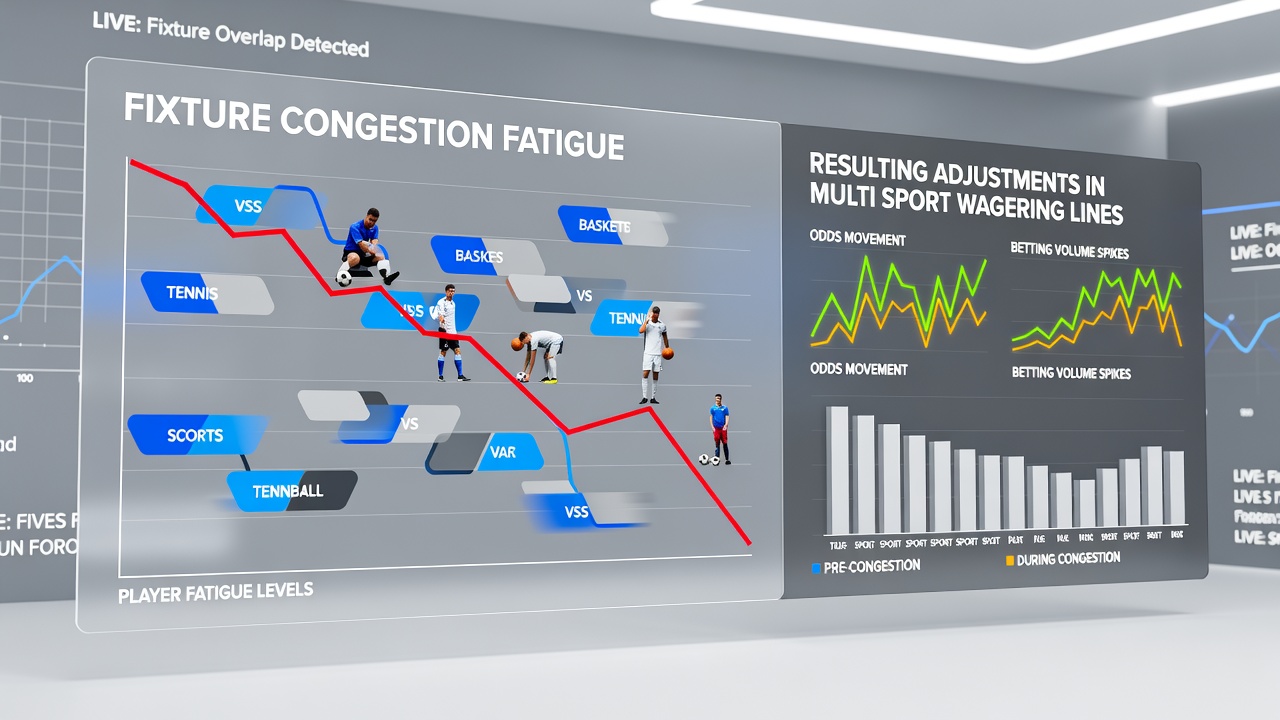
Multi-sport accumulator products combine these markets, so a single congested block can ripple across several selections. Operators therefore apply correlation adjustments that lower combined odds when multiple legs involve fatigued squads or individuals. Studies published by the German Sport University Cologne indicate that recovery markers such as heart-rate variability return to baseline more slowly after repeated high-load exposures, providing quantitative signals that modern pricing engines incorporate within hours of schedule confirmation.
Regional Schedule Patterns and Market Responses
North American leagues publish dense February and March calendars that create predictable fatigue clusters, while European football encounters additional strain during winter and spring continental rounds. Australian cricket administrators face similar issues when the Big Bash overlaps with international commitments, prompting early adjustments to run-rate markets and player milestone bets. Data released by the Canadian Centre for Ethics in Sport highlights that consistent monitoring of athlete wellness questionnaires helps identify elevated fatigue risk before it appears in match statistics, giving odds compilers earlier signals for line movement.
Live betting interfaces update totals and handicaps once in-game metrics deviate from pre-match baselines. A football side that recorded lower sprint distances in the preceding fixture often sees its next match total lowered by half a goal within the first 30 minutes of trading. Tennis markets adjust set totals when players compete on consecutive days at the same tournament, with break-point conversion rates dropping measurably after the second match. These shifts occur across platforms that aggregate data from multiple sports, allowing accumulators to reflect congestion effects without manual intervention.
Conclusion
Fixture congestion produces measurable performance changes that betting operators translate into updated wagering lines across football, basketball, cricket, and tennis. Performance datasets from multiple continents show consistent patterns of reduced output during dense periods, prompting systematic recalibration of totals, props, and accumulator products. As July 2026 approaches with overlapping international and domestic commitments, these adjustments will continue to rely on objective load and recovery indicators rather than subjective assessment alone.