Altitude's Subtle Effects on Athletic Outputs and Resulting Adjustments in International Competition Markets
Written by Anna Lange · Aug 5, 2026
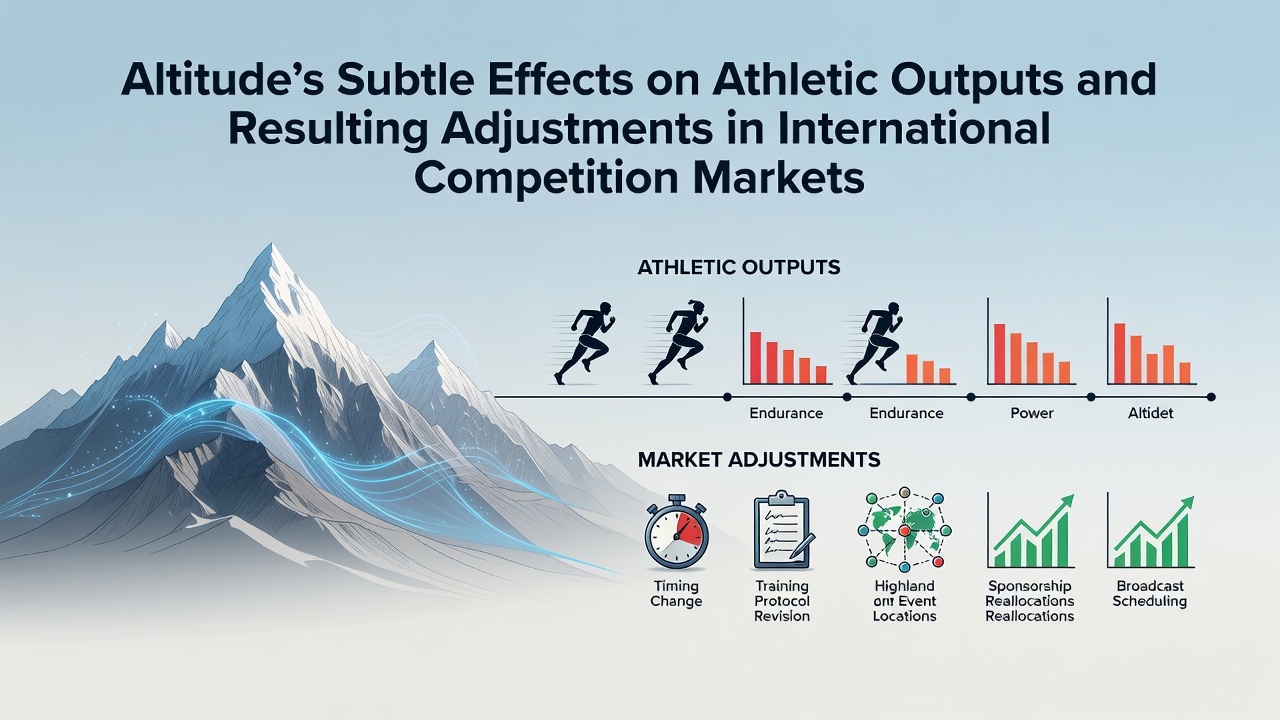
Altitude's Subtle Effects on Athletic Outputs and Resulting Adjustments in International Competition Markets
High altitude environments alter oxygen availability and air density in ways that shift athletic performance across multiple sports, and international competition markets respond with corresponding odds recalibrations. Researchers have documented these physiological changes through controlled studies and field observations at venues above 1500 meters, where reduced partial pressure of oxygen limits aerobic capacity while lower air resistance can benefit explosive movements. Data from endurance events shows consistent drops in output, whereas power-based disciplines sometimes record marginal gains, and these patterns prompt bookmakers to revise probabilities for upcoming fixtures.
Physiological Mechanisms at Elevation
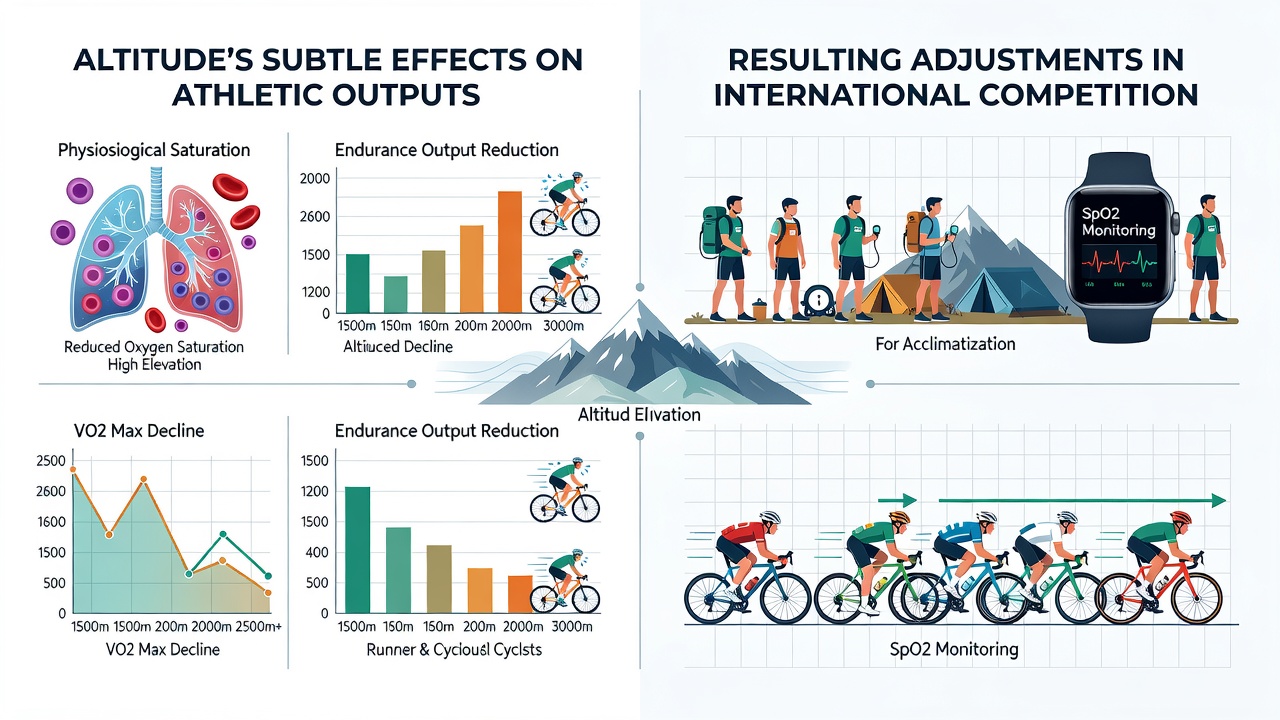
Reduced oxygen saturation forces the body to increase breathing rate and heart output to maintain energy production, yet maximum aerobic power declines by roughly 7 to 10 percent for every 1000 meters gained according to exercise physiology compilations. Studies indicate that acclimatization over several days partially restores function through elevated red blood cell production, although full adaptation requires weeks rather than the short windows typical between matches in tournament schedules. Sprinters and jumpers encounter less drag because thinner air permits faster limb speeds and longer flight times, and timing systems at the 1968 Mexico City Olympics captured several world records in these events that still stand.
Sport-Specific Performance Variations
Football matches played at altitude demonstrate measurable reductions in total distance covered and high-intensity running, with teams that arrive without prior acclimatization showing elevated fatigue in the second half. Cricket bowlers experience quicker onset of breathlessness during long spells, while batters may find slightly altered ball flight trajectories due to lower air density. Tennis players report changes in serve speeds and recovery between points, and basketball athletes display modified vertical leap metrics alongside quicker fatigue during repeated sprints. Observers note that these differences compound when matches occur in quick succession, as recovery windows shrink at elevation.
Historical Data from Major Events
The 1968 Olympic Games in Mexico City at 2240 meters produced sprint and jump records alongside diminished performances in distance events, establishing a reference point for later competitions. South American qualifiers for global tournaments regularly feature matches in La Paz at 3600 meters, where visiting squads have recorded lower goal tallies and higher concession rates in aggregated statistics. Recent analyses of Copa Libertadores fixtures confirm similar patterns, with home sides maintaining elevated win percentages that markets incorporate into pre-match pricing.
Market Adjustments in International Betting
Competition markets integrate altitude variables through algorithmic models that weigh historical venue data against team travel schedules and acclimatization periods. Operators revise handicap lines and total points or goals thresholds when fixtures move to elevated locations, and live betting platforms update probabilities during matches as performance metrics deviate from sea-level baselines. Figures from European and North American gaming associations reveal increased volatility in accumulator payouts when underdogs at altitude exceed expected outputs in early tournament stages.
Regulatory and Research Perspectives
Authorities such as those overseeing sport in Canada and Australia have funded investigations into altitude training protocols that teams adopt ahead of away fixtures, and these findings feed into broader competition preparation guidelines. A report from the Australian Sports Commission outlines measurable improvements in repeat sprint ability after structured altitude camps, while parallel work by the International Olympic Committee tracks environmental influences on elite outputs across summer and winter disciplines. Markets reflect these insights through adjusted futures pricing for events scheduled at known high-elevation venues.
Anticipated Shifts Around 2026 Fixtures
The 2026 FIFA World Cup will include matches at Mexico City venues exceeding 2200 meters, prompting early odds movements in global markets as analysts incorporate travel and recovery data for participating nations. Qualification campaigns leading into August 2026 already show bookmakers applying venue-specific multipliers for CONCACAF and South American ties, and mobile platforms deliver real-time alerts when squads announce shortened acclimatization windows. Historical patterns suggest that teams with prior experience at elevation maintain steadier performance curves, influencing both match result and player prop markets accordingly.
Conclusion
Altitude continues to shape athletic outputs through measurable physiological and environmental pathways, and international competition markets systematically embed these variables into pricing structures. Data accumulated from past events and ongoing research informs the adjustments that operators apply, ensuring that probabilities align with documented performance shifts at elevation. As fixtures approach in 2026 and beyond, these dynamics will remain central to how markets evaluate outcomes across affected sports.