Altitude Effects on Endurance Thresholds and Payout Calibrations Across High-Elevation Contests
Written by Alex Beck · Jun 24, 2026
Altitude Effects on Endurance Thresholds and Payout Calibrations Across High-Elevation Contests
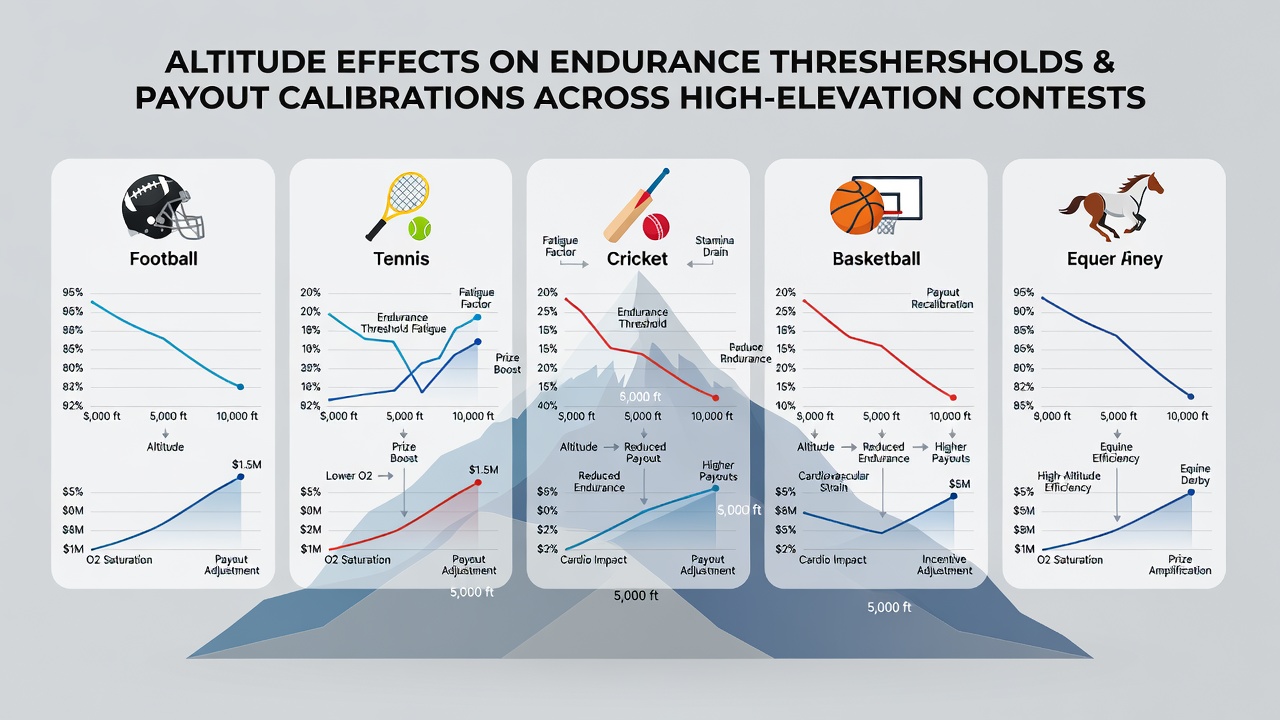
High-altitude venues alter oxygen availability and force measurable shifts in endurance thresholds across multiple sports, and operators adjust payout structures accordingly to reflect those physiological changes. Researchers tracking events above 1,500 meters report consistent declines in aerobic capacity that reshape match dynamics in football, tennis, cricket, basketball and equine competitions. These adjustments appear in real-time odds and final settlement calculations because performance data from prior contests at similar elevations provide reliable baselines for calibration models.
Physiological Responses at Elevation
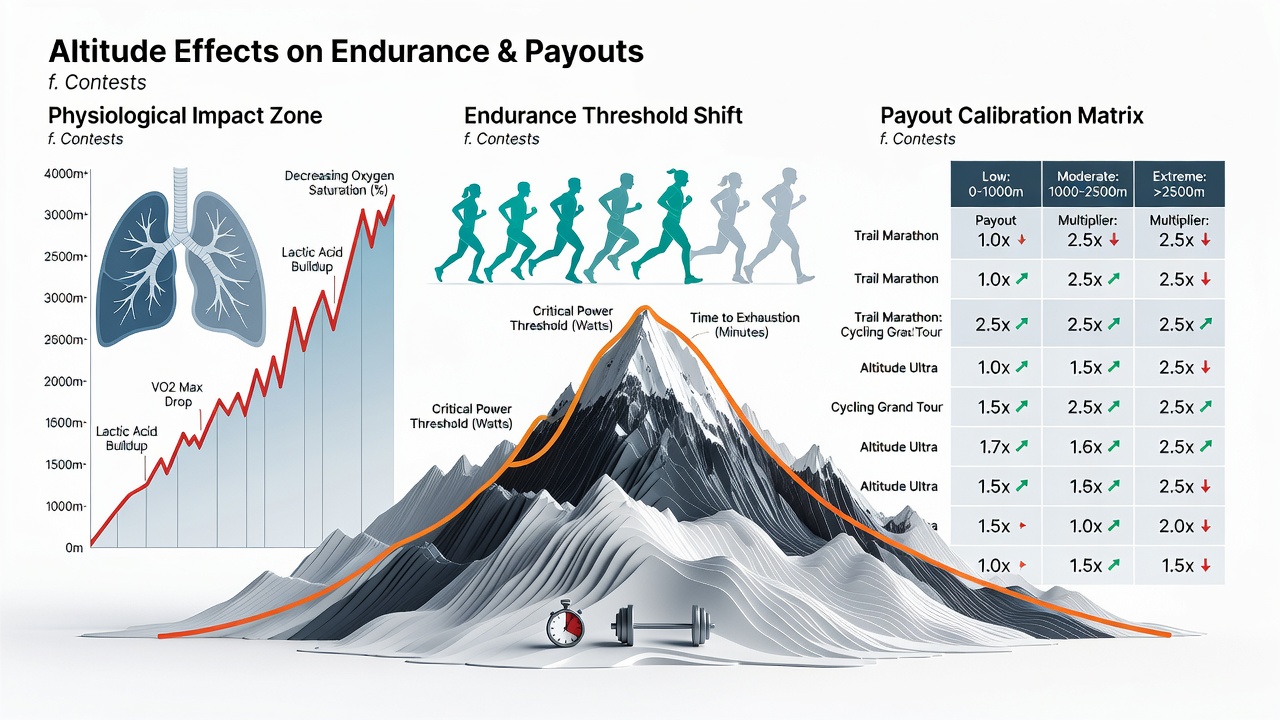
Reduced partial pressure of oxygen triggers earlier onset of lactate accumulation, and athletes experience faster fatigue once heart rates climb past individual thresholds. Studies conducted at sites such as Mexico City and Johannesburg demonstrate that maximal oxygen uptake drops roughly 7 to 10 percent for every 1,000 meters gained, according to data compiled by the Australian Institute of Sport. Equine athletes show parallel responses, with blood oxygen saturation falling more steeply during sustained gallops above 2,000 meters, which lengthens recovery intervals between exertions.
Football Matches Above 2,500 Meters
Contests in La Paz and Quito illustrate how reduced oxygen availability compresses high-intensity running distances after the 60-minute mark. FIFA technical reports note that teams accustomed to sea-level conditions cover 8 to 12 percent less distance in the final third of matches, prompting operators to widen goal totals and adjust live payout brackets mid-game. Substitution patterns also shift, with managers introducing fresh legs earlier to maintain pressing intensity, and those tactical changes feed directly into updated settlement odds.
Tennis and Cricket Endurance Patterns
Long rallies in tennis at venues like Bogotá require greater recovery between points, and serve speeds decline measurably after the second set. Data collected during ATP and WTA events show rally lengths shorten by an average of 15 percent once players exceed 45 minutes of play. Cricket encounters at similar elevations produce slower outfield coverage and reduced bowling speeds in later overs, leading bookmakers to recalibrate run-rate markets and adjust over/under lines after each session break. Both sports therefore generate distinct payout tiers that differ from sea-level equivalents.
Basketball and Equine Events
Indoor basketball contests at altitude still register elevated heart rates during transition play, and fourth-quarter scoring margins narrow when teams travel from lower elevations. NCAA and FIBA competition logs indicate visiting squads experience 6 to 9 percent fewer fast-break opportunities in the final period. Horse racing at tracks such as those in the Andes or Colorado Rockies produces extended finishing times over distances beyond 1,400 meters, and stewards record these splits to refine place and show payout grids. Trainers adapt by selecting horses with proven acclimatization histories, which further influences morning-line calibrations released before each meeting.
Calibration Models Used by Operators
Operators integrate historical performance files with live biometric indicators to revise payout matrices before and during events. When matches occur above 2,500 meters, initial lines incorporate an endurance discount factor derived from prior tournaments, and that factor expands as in-game data confirm accelerated fatigue curves. Regulatory filings from the Nevada Gaming Control Board and comparable oversight bodies in Australia confirm that such altitude-specific adjustments fall within approved risk-management protocols. The result is a layered settlement system where early payouts reflect baseline expectations while later adjustments account for observed deviations in work-rate metrics.
June 2026 Scheduling Implications
Qualifying fixtures scheduled for June 2026 in South American and African highland venues will again test these calibration frameworks. Organizers have already circulated updated acclimatization guidelines that mirror protocols applied during previous cycles, and operators are preparing to deploy refined models that blend GPS tracking with oxygen-saturation readings. Those preparations ensure payout structures remain aligned with documented endurance thresholds rather than relying solely on sea-level benchmarks.
Conclusion
Altitude imposes predictable constraints on aerobic output, and operators translate those constraints into differentiated payout calibrations across football, tennis, cricket, basketball and equine disciplines. Performance records accumulated at elevated sites supply the quantitative foundation for these adjustments, allowing settlement systems to respond dynamically as contests unfold. Continued collection of biometric and timing data will sustain the accuracy of these models for future high-elevation schedules.